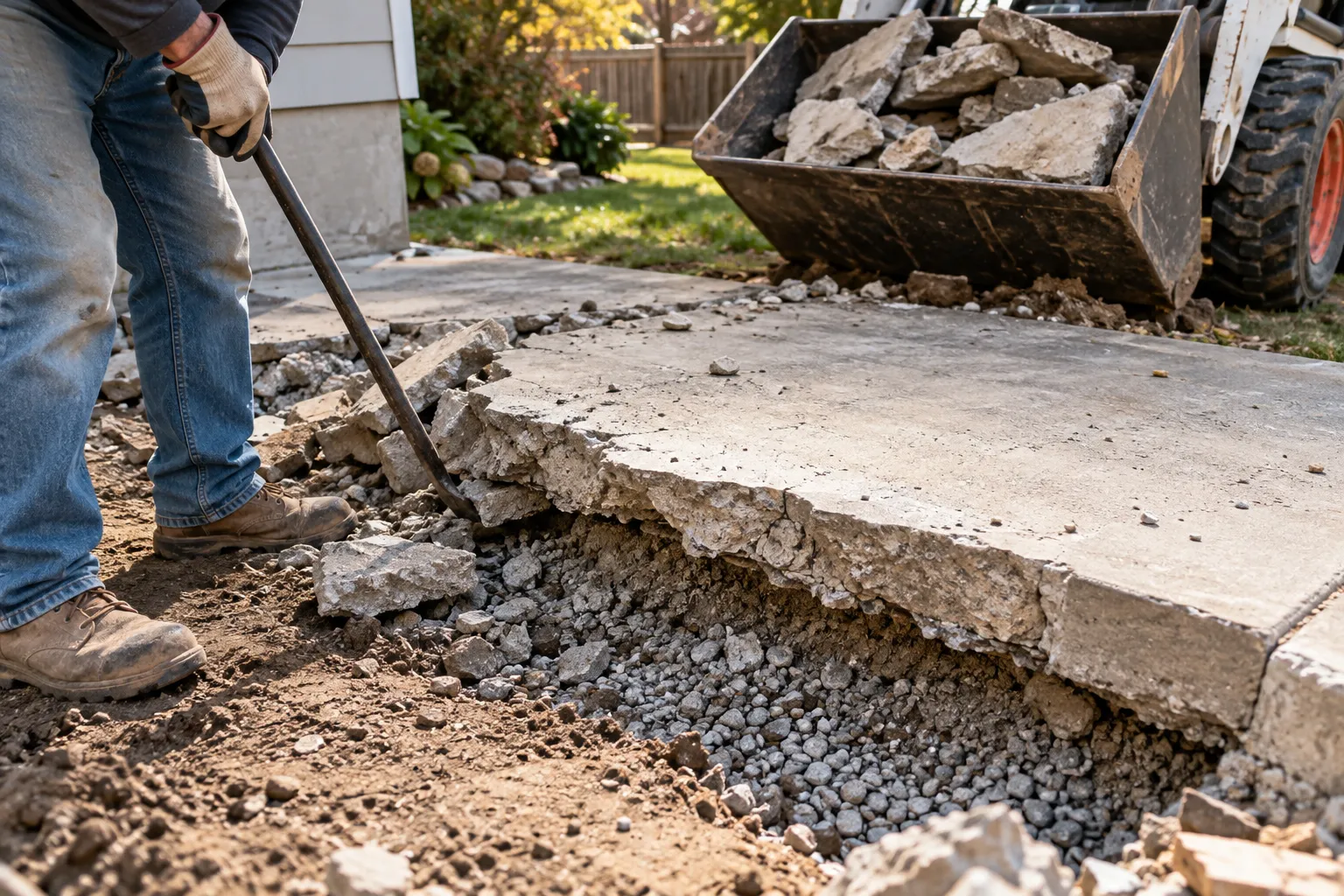
Start with the surface, then the route
Record the slab’s length and width, its current use and the route to a possible loading area. These facts are more useful than a photograph cropped so tightly that it shows only a crack. A wider picture reveals the shed, fence, planting or wall beside the concrete.
If the slab is irregular, sketch its outline and divide the surface into simple rectangles for your own notes. Label the dimensions as approximate. The purpose is to describe the job, not to certify its construction.
Your estimate checklist
Write down: length and width; known thickness or “unknown”; what stands on the slab; the narrowest gate; distance to the loading position; changes in level; and nearby surfaces to retain. Take one wide photograph, one boundary view and one view of the access route.
Describe whether you want breaking and hauling together or whether broken material is already waiting. Include any permit or project plan you already have. Avoid sending personal documents that do not help define the work.
Compare the same finish point
Ask each estimate to describe the retained edges, included hauling, loose-fragment cleanup and final condition. “Remove the pad” can mean different things if one quote includes the haul and another stops at a pile on the property.
Replacement concrete, imported base, drainage changes and landscaping should be named separately. Once those boundaries are written down, you can compare the work instead of comparing two prices attached to different jobs.
Put the information to use
Concrete Slab Removal scope explains the service boundary. Use the estimate checklist to keep your measurements, photographs and access notes together.
Sources and further reading
Authority and facility guidance checked October 28, 2026. Check current requirements for the actual address and material.